
Homerun
May 27, 2026
-
4 min read
How to Run POCs and POVs That Actually Win Deals

The Proof-of-Concept (POC) or Proof-of-Value (POV) is one of the most essential steps in the B2B sales cycle. It is also one of the most expensive presales activities you can undertake, so you need to avoid the mistakes that can derail it.
In our experience, the number one reason POCs drag on, go over scope, and fail to reach a conclusion is the absence of a formal Evaluation Plan.
What an Evaluation Plan actually does
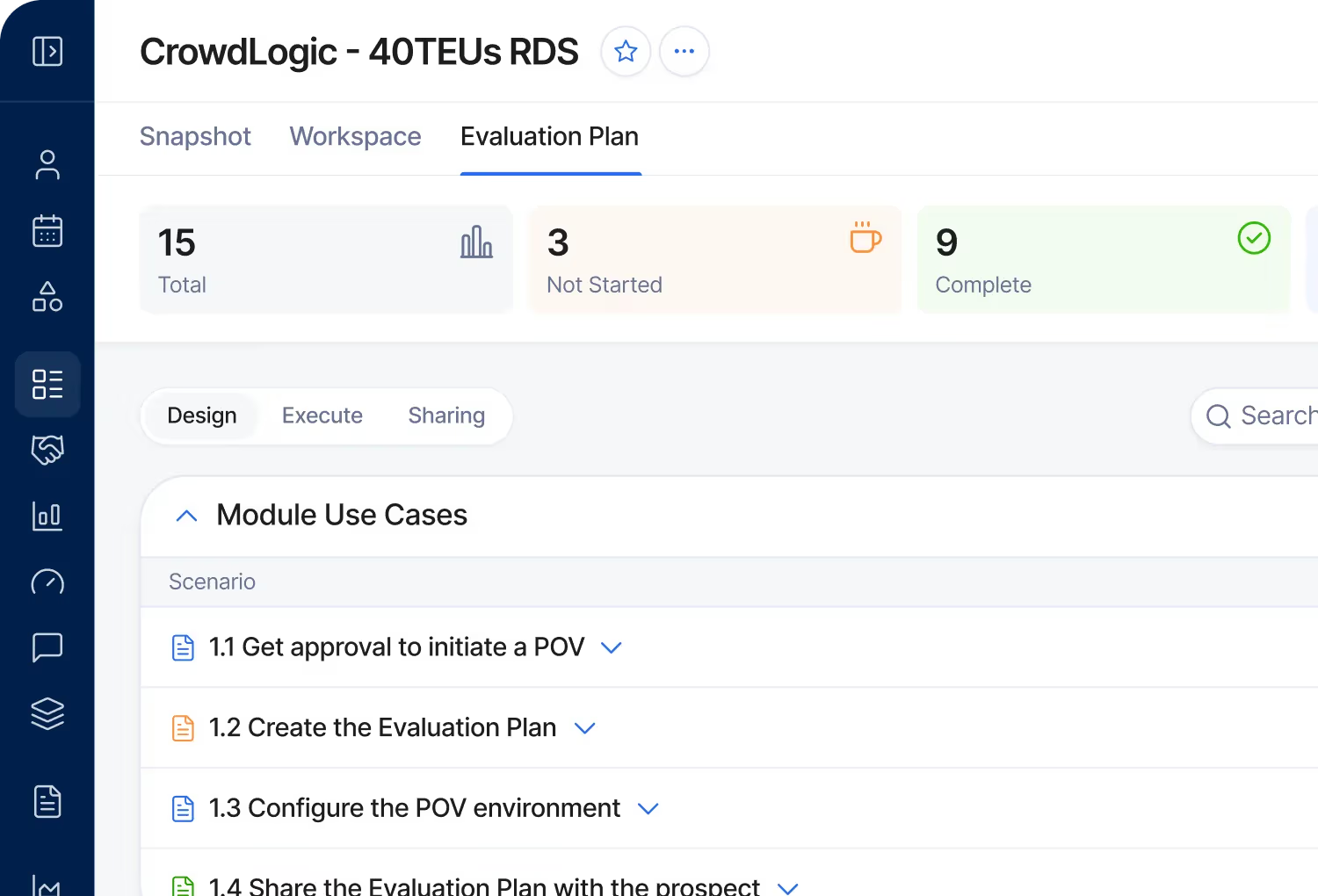
An Evaluation Plan brings structure to your POC/POV. It aligns you and your prospect on the use cases to be tested or demonstrated, and the success criteria for each. Without both elements locked down before you begin, you have no agreed-upon finishing criteria.
This sounds simple, but creating an Evaluation Plan can be challenging for a few reasons. Prospects may not know what their use cases should be or how to test them. They're also busy with their regular jobs, so they don't have time to work out the best way to evaluate your product.
The reality is, this is your job. Show your prospect that you are experienced and value their time by recommending a list of use cases that demonstrate how your product solves their business problems.
When building your use case list, think about it in terms of two main inputs. The first is what your prospect wants to test, and the second is what you know they should test. These are not always the same thing.
It may sound obvious, but your Evaluation Plans should guide prospects to test the most valuable features of your product without overwhelming them with every capability you offer. If the POC is part of a competitive deal, include specific use cases where you know you'll excel and your competitor will struggle.
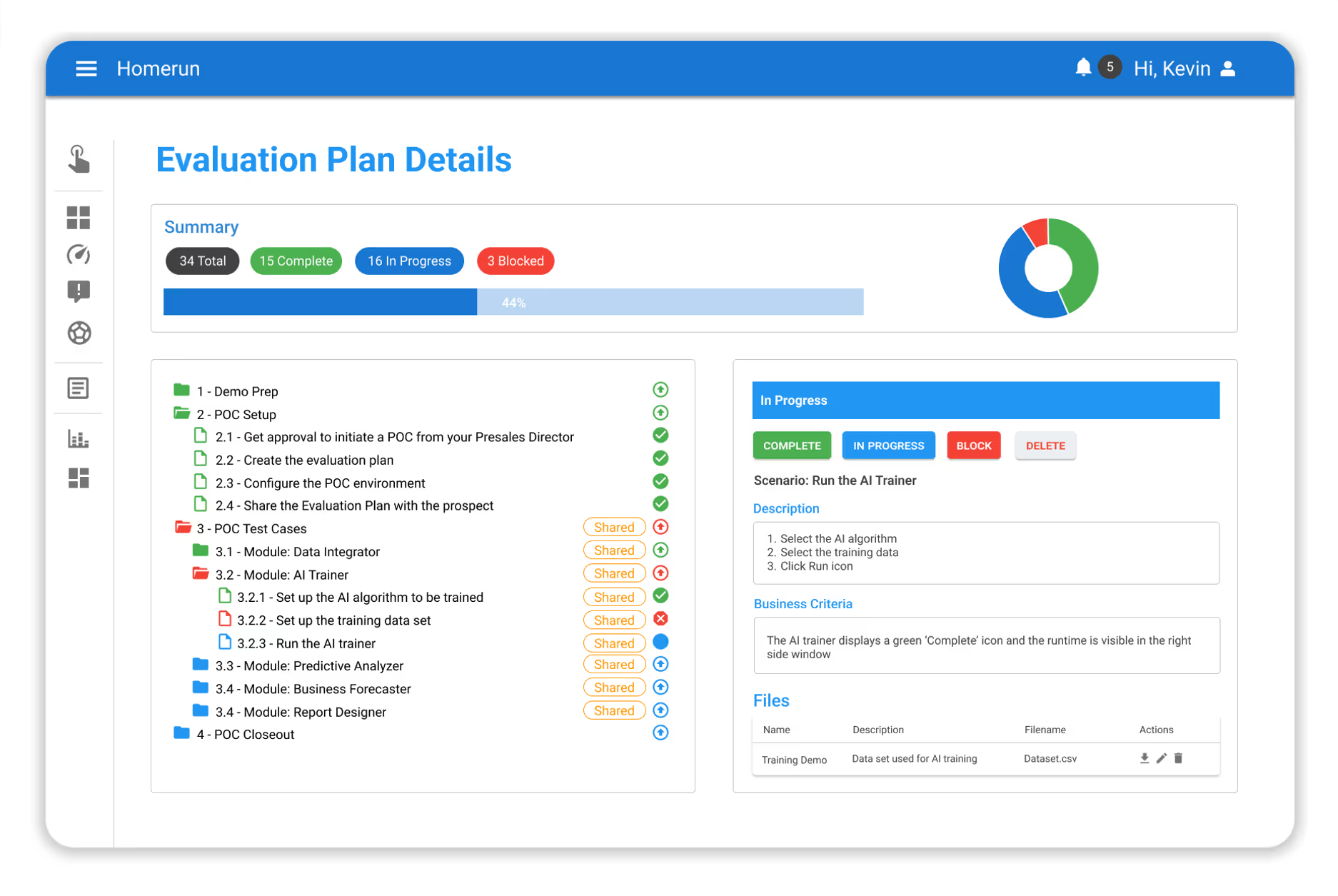
If your prospect will be hands-on with your product, include step-by-step testing instructions for each use case. Your prospect is not yet an expert, so don't assume it's as easy to use as you think. Also design each use case so it can be clearly assessed as pass or fail. This clarity matters because it ensures everyone knows what"done" looks like.
Getting explicit buy-in before you begin
Once you've created an initial version of the Evaluation Plan, share it with your prospect and collaborate until it's complete. The goal is to reach a point where the prospect agrees that, if all documented use cases satisfy all success criteria, you will be named the vendor of choice. If you don’t have that agreement, keep iterating by asking what else must be included before they can agree.
Securing explicit buy-in before the POC kicks off is your primary defence against scope creep. Without it, you have no shared definition of success to hold the engagement to, but with it, you have a contract of intent that both sides can refer to when new requests start to appear.
What scope creep actually costs you
Scope creep increases deal risk, lengthens your sales cycle, erodes customer goodwill, and wastes time and effort that could be directed to other opportunities. A POC without an agreed definition of success will keep expanding to fill whatever time and good will your team has left to give.
The solution is always a well-designed Evaluation Plan with explicit buy-in, agreed before the POC begins and used actively throughout.
Running the POC: the seven steps
Once the plan is signed off, the execution follows a clear sequence.
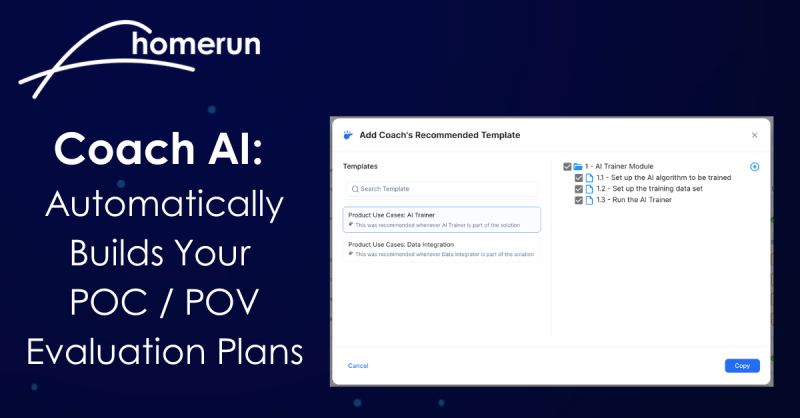
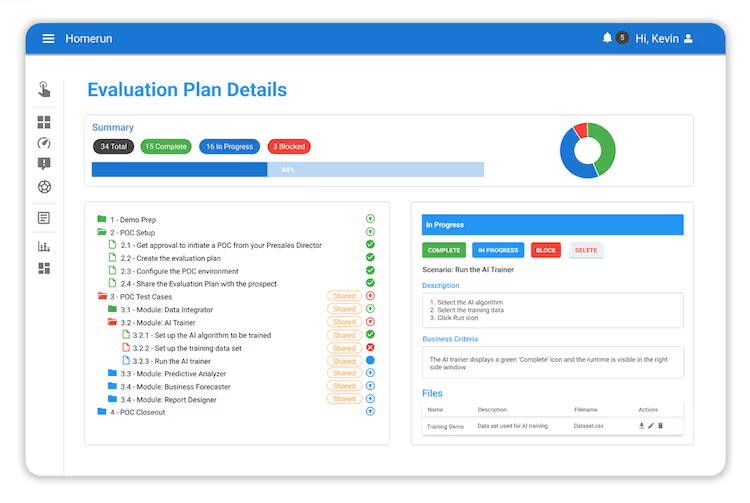
Step 1: Build reusable templates. Create Evaluation Plan templates that capture your standard steps, use cases, and success criteria. These become your baseline for every new POC, saving setup time and ensuring nothing is missed.
Step 2: Assemble a tailored plan for each POC. Copy the relevant templates and customise the plan for the prospect. Assign tasks to team members, set due dates, and attach any supporting materials or documentation.
Step 3: Share the plan with your prospect. Decide which parts of the Evaluation Plan to share and invite your prospect to view and interact with it directly. This is where the collaborative relationship begins to take shape.
Step 4: Track progress together. Run the POC collaboratively, documenting status, exchanging messages, managing files, and capturing notes in a shared space. Both sides stay accountable, and ambiguity has nowhere to hide.
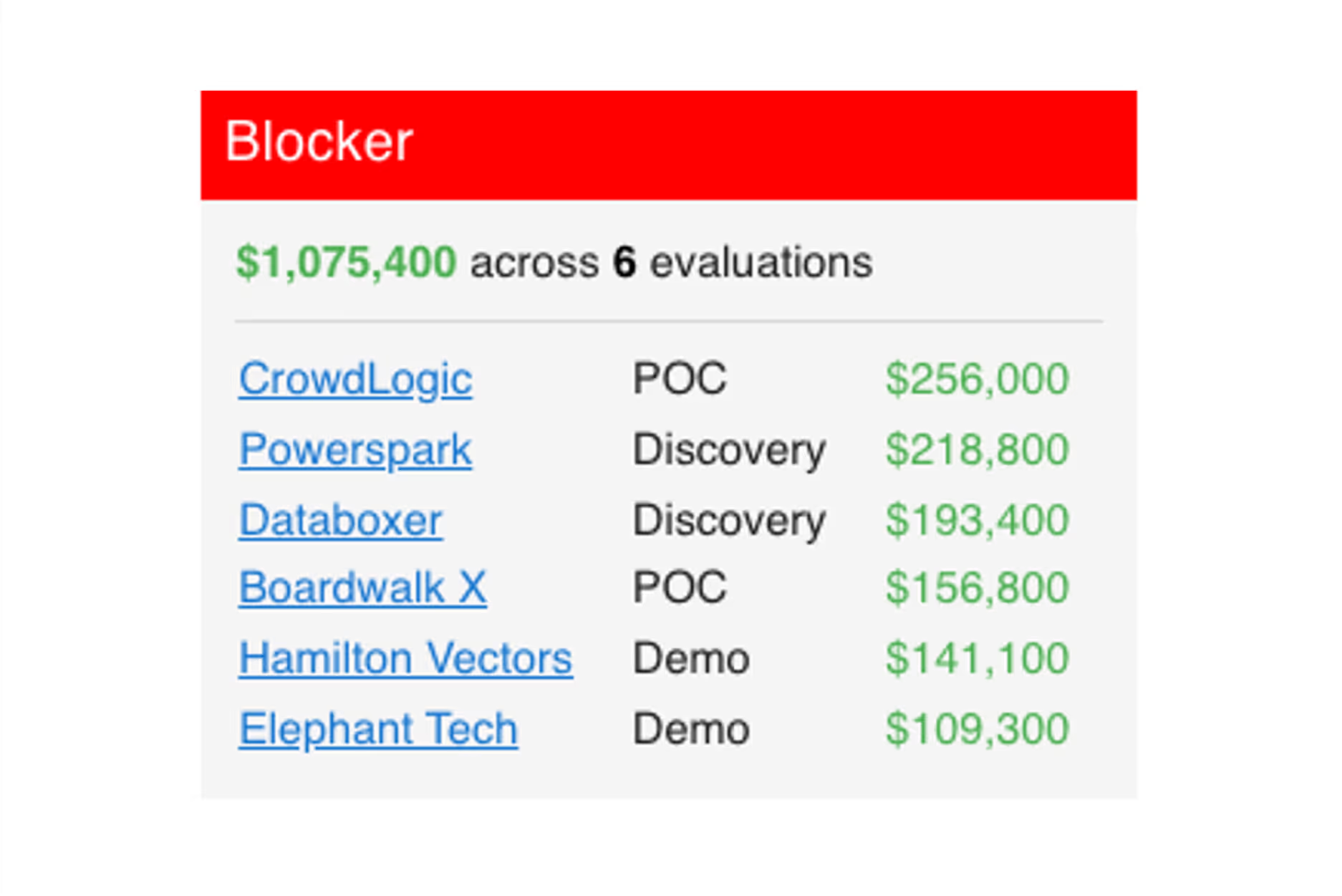
Step 5: Address blockers immediately. When unexpected issues or failing use cases arise, respond right away. You can recover from a blocker, so you can’t afford to let one sit. Work with your prospect to resolve it as quickly as possible.
Step 6: Conclude with demonstrated success. The POC ends when every use case is completed successfully, not when time runs out or the prospect stops responding.
Step 7: Celebrate the technical win. You and your prospect have met every success criterion in a plan you built together. That is the very definition of a technical win and of being named the vendor of choice.
The bottom line
A well-designed Evaluation Plan, with genuine buy-in from your prospect before the POC starts, brings your POC/POV to a logical conclusion as quickly as possible, demonstrating success. It keeps you on track, on time, and in scope, while building a more collaborative relationship along the way. It also gives both sides a clear, shared definition of success, making the technical win undeniable when you reach it.
If you can run your POCs this way, you will win more deals, more quickly.
If you'd like to see how leading presales teams structure and manage collaborative POCs at scale, book a personalised demo with Homerun.
Latest articles





.avif)

.avif)







Blog
POC Best Practices: Evaluation Plans – The Key to Great POCs and POVs
December 7, 2022
-
4 min read



















Blog
How to Get Marketing to Find Deals that Are Amazing ‘Technical Fits’
November 10, 2021
-
4 min read








Ready to make presales your unfair advantage?
One workspace, one team. Give everyone the clarity to work together, move faster, and win more.