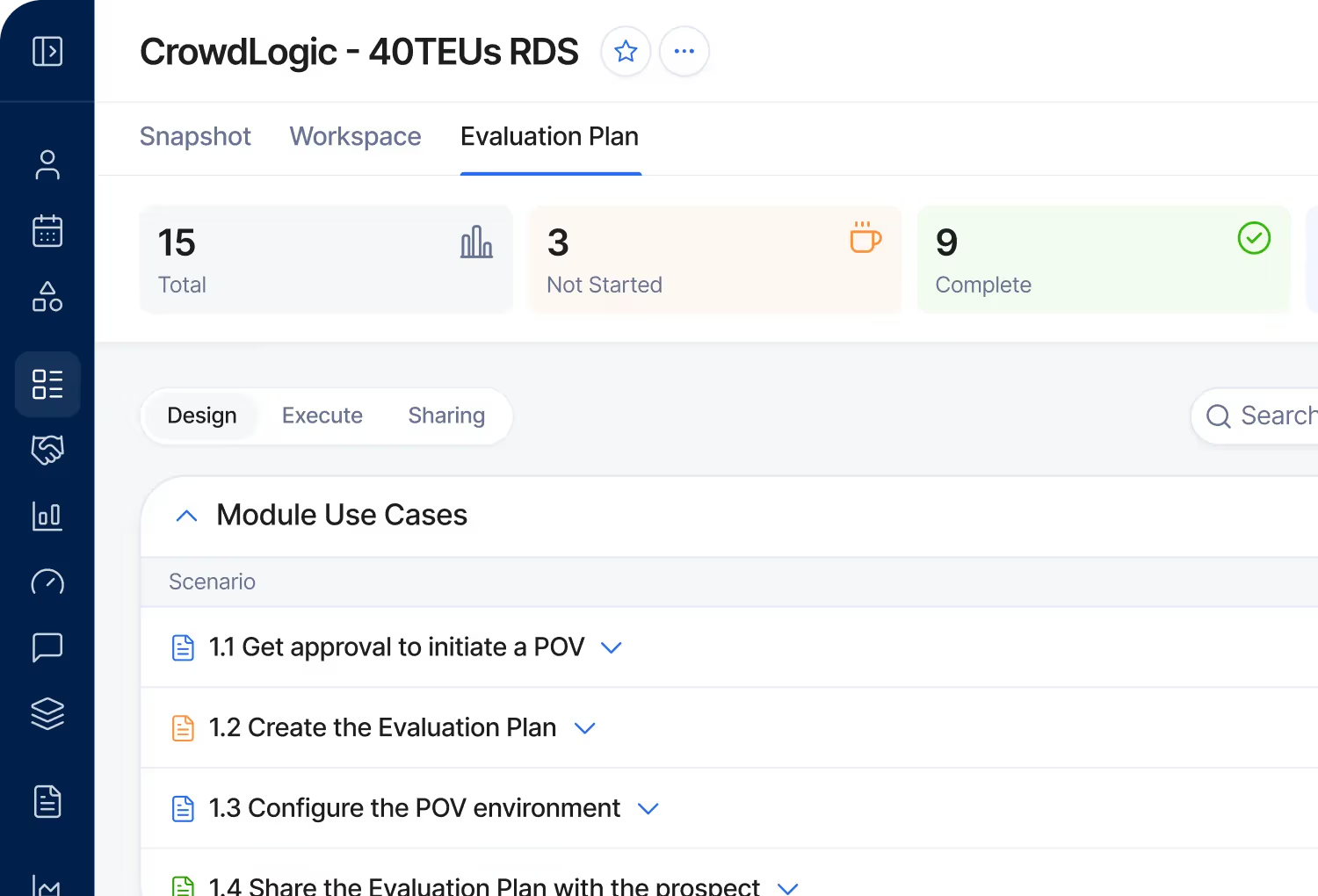
Pioneering the future of presales
Homerun is the most established presales platform on the planet, relied on by public companies to high-growth startups to manage Billions of dollars in pipeline revenue and presales activity.

Trusted by World-Class Presales Teams







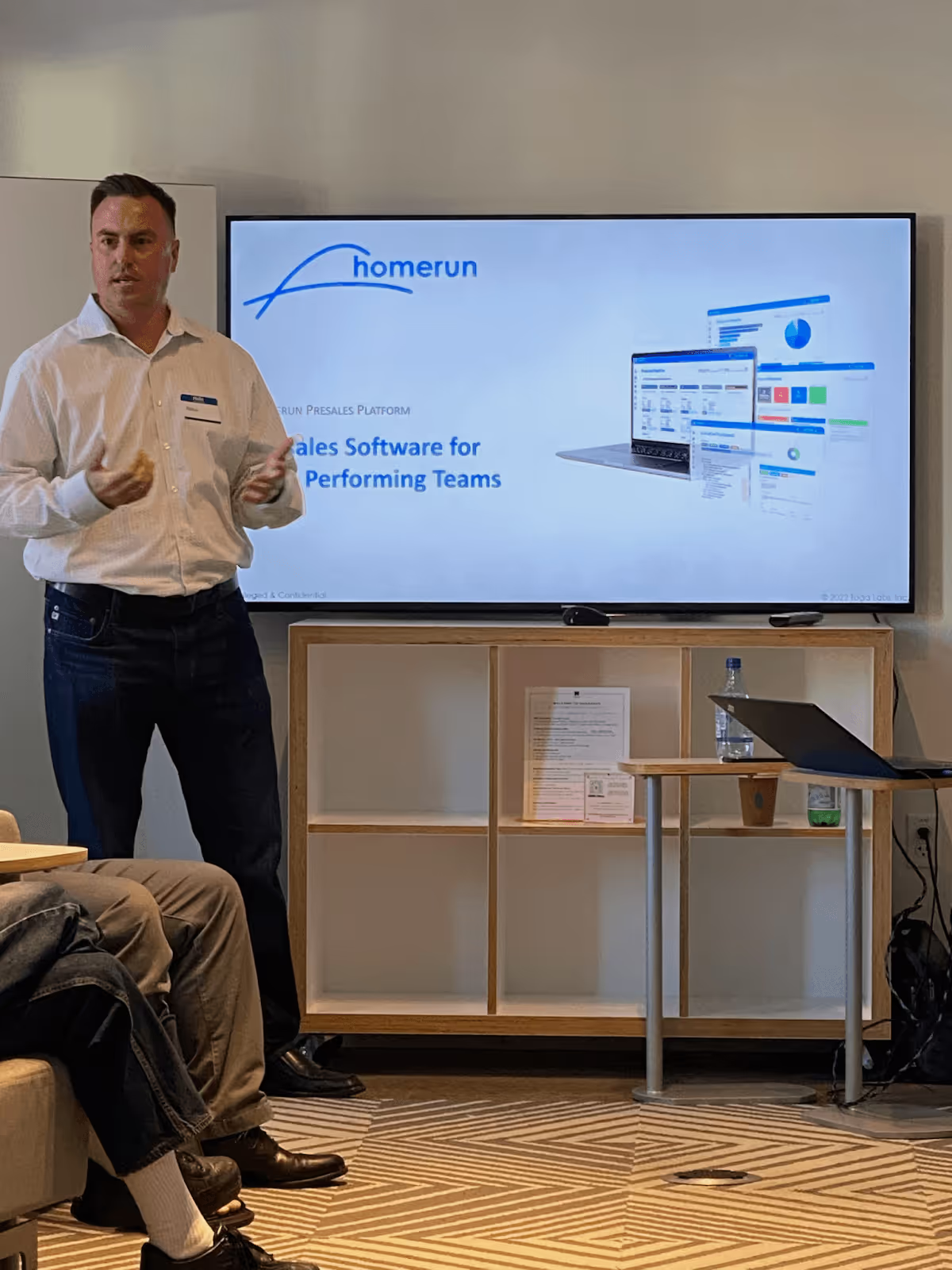
Built by presales, for presales
Homerun was forged in the field by brothers Brian and Kevin, career presales professionals who have lived the life and done the job.
Before “presales platform” was even a category, they were running complex sales cycles for Fortune 500s and scaling startups, both as ICs and managers. The tools didn’t fit, so one day Kevin built one for himself as a side-project.
Fast-forward six years later, Homerun now powers presales teams across industries and around the world, helping them win more efficiently, confidently, and repeatedly.
Measurable ROI
15% Deal close rate improvement
16% Sales cycle reduction
4 weeks Faster new-hire onboarding
9 hours Saved per IC per week
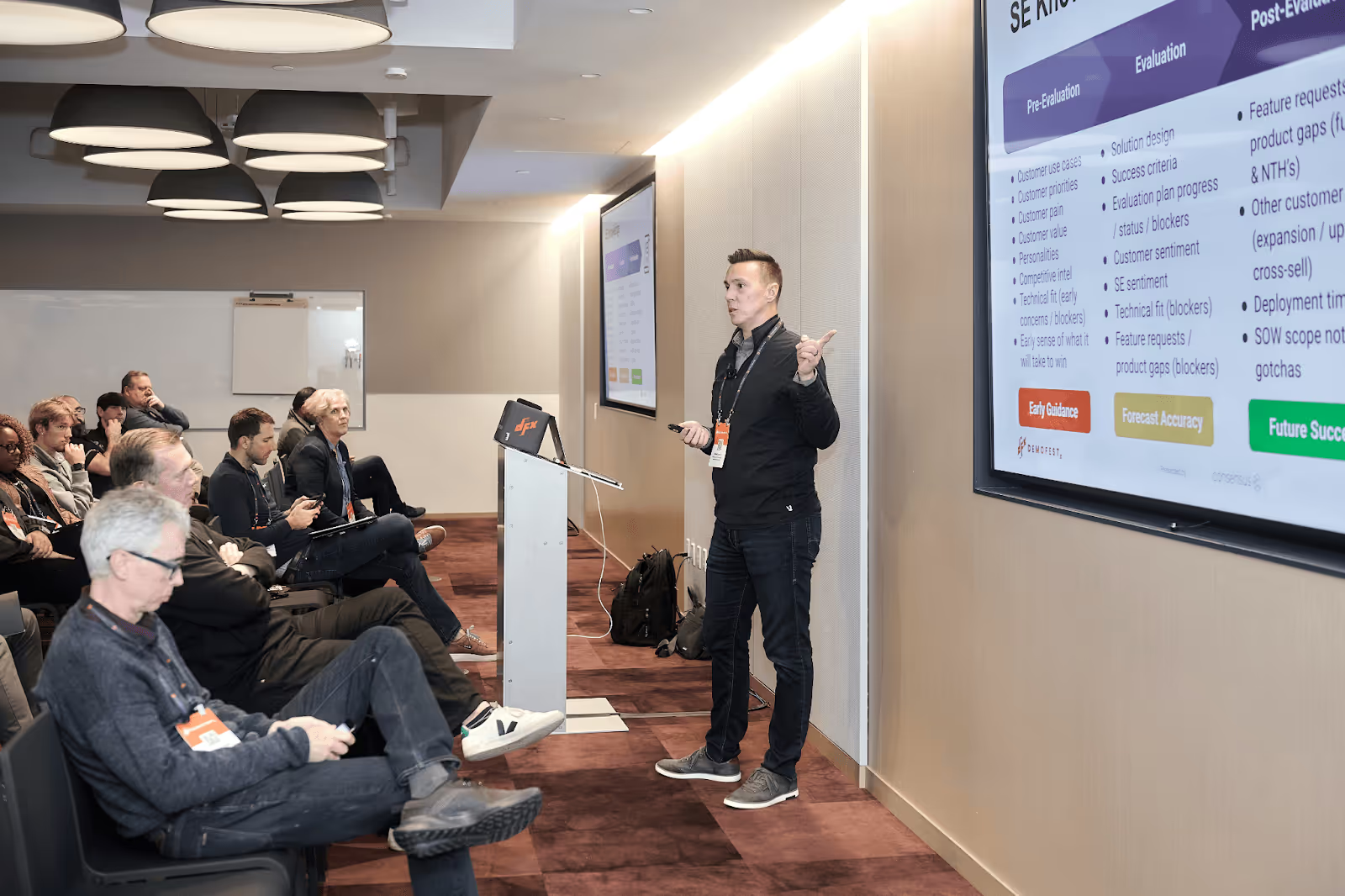
The proven choice for presales leaders
Presales leaders choose us when they can’t afford to get it wrong. We’re the proven market leader and dependable partner they trust to deliver outcomes that matter to their C-Suites. Here’s why the best presales teams in the world rely on Homerun.
Bootstrapped, profitable, and growing
Our financial stability is your long-term security. We only exist because customers love our software and get value from it year after year. We don’t need to chase funding rounds or pivot to larger markets. You have peace of mind that we’re going to be with you all the way.
Battle-tested at scale
Choosing a presales vendor is a serious decision that needs to stand up to C-Suite scrutiny. You need to know you won’t hit the power curve of vendor capabilities or struggle with real-world complexity and scale. You want the battle-tested market leader on your side!
World-class presales in-a-box
On Day 1 Homerun instantly levels-up your team. We’ve seen every presales process imaginable across our customers. Homerun embodies what the best-of-the-best presales teams are doing to close deals, close them faster, close them larger; with all the modern AI to supercharge productivity along the way.
Proven track record of success
When results matter, you need a solution that can deliver. Our customers achieve 15% more wins; 16% faster closes; 4 weeks faster new hire onboardings; +9 hours reclaimed per SE/SC/SA per week. We know what works and what doesn’t; the best practices and the pitfalls; and how to make every SE/SC/SA… your best SE/SC/SA.
Why presales leaders and their teams are all in on Homerun
“Homerun is an excellent pre-sales focused platform dedicated to driving technical excellence, cadence in deals, and technical visibility across all inflight and historical deals.”

Martin Cook

“On our executive calls, I have the data to surface technical risks. Before Homerun, we weren't getting the data we needed, it wasn't timely, and the adoption wasn't great. With Homerun, we’re now getting all three.”

Brian Luisi

“My team uses Homerun to deliver a better experience during the technical evaluation for our partners, customers, and executives. I am now able to get full visibility!”

Michael Turner

Homerun has changed the way we run our deals. It gave us the tools we needed to scale.
The SE operating system we needed... rolling out Homerun transformed our Solutions Engineering team.
I personally noticed an instant increase to my productivity since leveraging Homerun and recommend it to everyone.
The best decision I made for my SE team... Homerun replaced spreadsheets and ad-hoc Salesforce reports, saving each SE hours a week.
For the first time, we have a true "presales view" of the sales cycle, complete with our own metrics and reports.
Homerun is awesome. I use Homerun everyday, and even live on calls, rather than the typical notepad I was used to.
Homerun Presales is the Gold Standard for POC management. We dissect what wins and what loses POCs, systematically implement those lessons learned to refine our POC process.
Homerun has revolutionized our approach to presales. The collaboration features have made it easier for our team to work together and close deals.
My new SE Operating System... Homerun helps me stay on top of everything, reduce manual admin, and prioritize my time.
Thanks to Homerun, we now have a solid presales process to rely on. We can directly measure our team's overall health and effectiveness from the PoC stage to Tech Win.
Game-changing tool for technical presales teams... It's impossible to choose just one feature as the best thing about Homerun.
The team at Homerun are top notch, forward thinking, knowledgeable pre-sale titans that have designed a solution that delivers immediate value on several aspects
FAQ
Questions presales leaders ask before choosing Homerun
Deal risk, forecasting and quarter-end, and how Homerun sits next to the AI and call tools you already have.
Something we missed? Talk to us →Deal risk
How do I spot deals likely to lose before wasting time on them?
Deal risk
How do I spot deals likely to lose before wasting time on them?
Homerun spots deals likely to lose by matching each opportunity against the profiles of past winning and losing deals. As it learns from all the deal signals (call transcripts, Slack/Teams, emails, notes), it compares those profiles against historical outcomes. If a deal matches a losing pattern, Homerun raises a risk alert, showing how rarely that profile wins and asking whether you want to qualify it out or invest the time to overcome it. This helps a sales engineer decide where to focus effort early, rather than discovering a deal was unwinnable after weeks of work.
See deal risk in Homerun's team dashboardsValue mapping
What is value mapping in presales, and how does it work?
Value mapping
What is value mapping in presales, and how does it work?
Value mapping in presales is the practice of linking why a buyer is buying to the products and capabilities you should show them. Some presales teams call this value selling. In Homerun, it works in stages. First, the AI extracts the buyer's business objectives from discovery calls, such as "lowering operational costs". It then maps each objective against a library of value drivers the team has set up, and each value driver maps to specific products and capabilities. Homerun then recommends which capabilities belong in the solution set. The payoff is that a sales engineer shows the two or three capabilities that matter most for the buyer's goal instead of feature-dumping, and teams that sell this way achieve higher average contract value (ACV).
See value mapping in HomerunQuarter end
How can presales help close a revenue gap at the end of a quarter?
Quarter end
How can presales help close a revenue gap at the end of a quarter?
Presales can help close a quarter-end revenue gap by identifying deals that could realistically be pulled forward, which Homerun surfaces via a feature called Quarter Makers. It reviews every deal in flight, including each deal's stage, what still needs to happen, and how long that work has historically taken, then flags deals eligible to close in time. If a team is short of target, for instance, Homerun might show five later-stage deals and point out that starting a technical evaluation now leaves enough time to bring one into the quarter. This lets the team act early, rather than realizing the gap once it's too late.
Forecasting
How can presales leaders contribute to sales forecasting?
Forecasting
How can presales leaders contribute to sales forecasting?
A presales leader contributes to sales forecasting by bringing technical deal intelligence that shows which opportunities are genuinely on track or have technical risks. Homerun supplies that evidence for deals in Best Case or Commit, as well as for early-stage deals, to help qualify them out. Homerun's reporting shows how deals move through stages, where the risks sit, and which opportunities match winning profiles, so a leader can speak to the pipeline with data rather than gut feel. Homerun also flags where a presales team can move the number, identifying later-stage deals that could be pulled into the quarter. This matters because presales can be viewed as sales support with no ownership of the forecast, even though the team has a meaningful role in helping hit targets.
See Homerun's team dashboards and deal reviewsAI approach
How is Homerun's approach to AI different from tools that automate everything?
AI approach
How is Homerun's approach to AI different from tools that automate everything?
Homerun supports both a human-in-the-loop approach and automation of presales work end to end. For human-in-the-loop, every AI output is a recommendation with the reasoning and source behind it, and the sales engineer can accept, edit, or reject it. This is useful because users often spend more time reviewing, double-checking, and undoing what the AI did than the work would have taken them to do directly. As more deals are done and the level of comfort with the AI decisions being made increases, you can shift to more automation. Our view is that a tool should support best practice and provide choices, and our contextual layer that drives this is built around how the best presales teams operate. This makes Homerun purpose-built for the job, rather than just another sales/GTM tool.
Discussion paper: so you want to build your own presales platformReady to make presales your unfair advantage?
One workspace, one team. Give everyone the clarity to work together, move faster, and win more.