
Homerun
April 27, 2026
-
4 min read
From “Support Function” to Revenue Intelligence: What Presales Is Really Sitting On

The problem most teams don’t realize they have
If you ask most sales leaders how a deal is tracking, you’ll get a confident answer, but if you ask a presales engineer the same question, you’ll usually get a different tone. Not because one is right and the other is wrong, but because they’re working with different levels of visibility. The sales view is pipeline stages, activity counts, and maybe a forecast category. The presales view is messier but far more grounded in reality. They know where the deal is fragile, where the technical gaps are, and where things are starting to drift.
The problem is that none of that insight reliably makes it out of presales. It sits in notes, calls, side conversations, or just in someone’s head. By the time it surfaces, it’s usually too late to do anything about it.
Presales already know where deals are won and lost
Sales engineering teams have a knack for knowing:
- Which deals are genuinely progressing, and which ones are stalling
- Which feature gaps are likely to kill a deal
- Which customers are aligned, and which ones are quietly disengaging
- Where a proof of concept is going off track, even if it hasn’t been said out loud yet
It’s because presales teams see and hear this every day through discovery calls, demos, technical evaluations, and side conversations with champions. It’s the closest thing you have to a real-time view of deal health. However, this insight is often informal, inconsistent, and difficult to aggregate. As a result, it’s dismissed as anecdotal rather than treated as a reliable signal.
Why that insight never reaches the people who need it
Most organizations don’t deliberately ignore presales, but it often happens as a by-product of how the work is structured. Presales spans multiple tools, with a CRM for some fields, spreadsheets for tracking, documents for notes, and call recordings stored elsewhere. None of it is designed around how they work day to day, so that:
- Important details don’t get captured because there’s no easy place to put them
- Data that is captured is incomplete or outdated
- Managers rely on asking individuals for updates rather than seeing a clear picture
- Leadership only sees what fits neatly into the forecast
From a presales perspective, it feels like you’re constantly doing the work but not getting credit for the insight it brings. From a leadership perspective, it looks like a lack of data. The reality is that both are true.
The hidden asset: technical revenue intelligence
The shift most teams haven’t made yet is recognizing that presales is also a special data source, not just a delivery function. It’s the kind of data source that can directly answers questions like:
- Why are we losing deals right now?
- Which product gaps are costing us real revenue?
- Which opportunities in the forecast are actually at risk?
- Where are we wasting time on deals that won’t convert?
In other words, it’s revenue intelligence, coming from a part of the organization that hasn’t traditionally been treated that way. You can see this play out when that data is finally surfaced properly. Suddenly, sales leaders want it for forecast calls, product teams want it to prioritize the roadmap, and even finance gets involved because it ties directly to revenue risk. Until that point, most of them don’t even realize the data exists.
Why “better reporting” doesn’t fix the problem
A common reaction is to try to solve this with reporting by adding more fields to the CRM, building a few dashboards, or asking the team to be more disciplined about updates. It sounds reasonable, but it rarely works because the underlying data isn’t being captured in a structured, consistent way. If the inputs are messy, the outputs will be too. You end up with:
- Dashboards that look good but don’t reflect reality
- Reports that require constant manual explanation
- Low adoption because updating the system feels like extra work
From an engineer’s point of view, it’s hard to justify spending time maintaining a system that doesn’t help them get through their day, so they don’t do it, or they do it just enough to stay compliant. Either way, the insight never fully materializes.
A more practical way to think about it
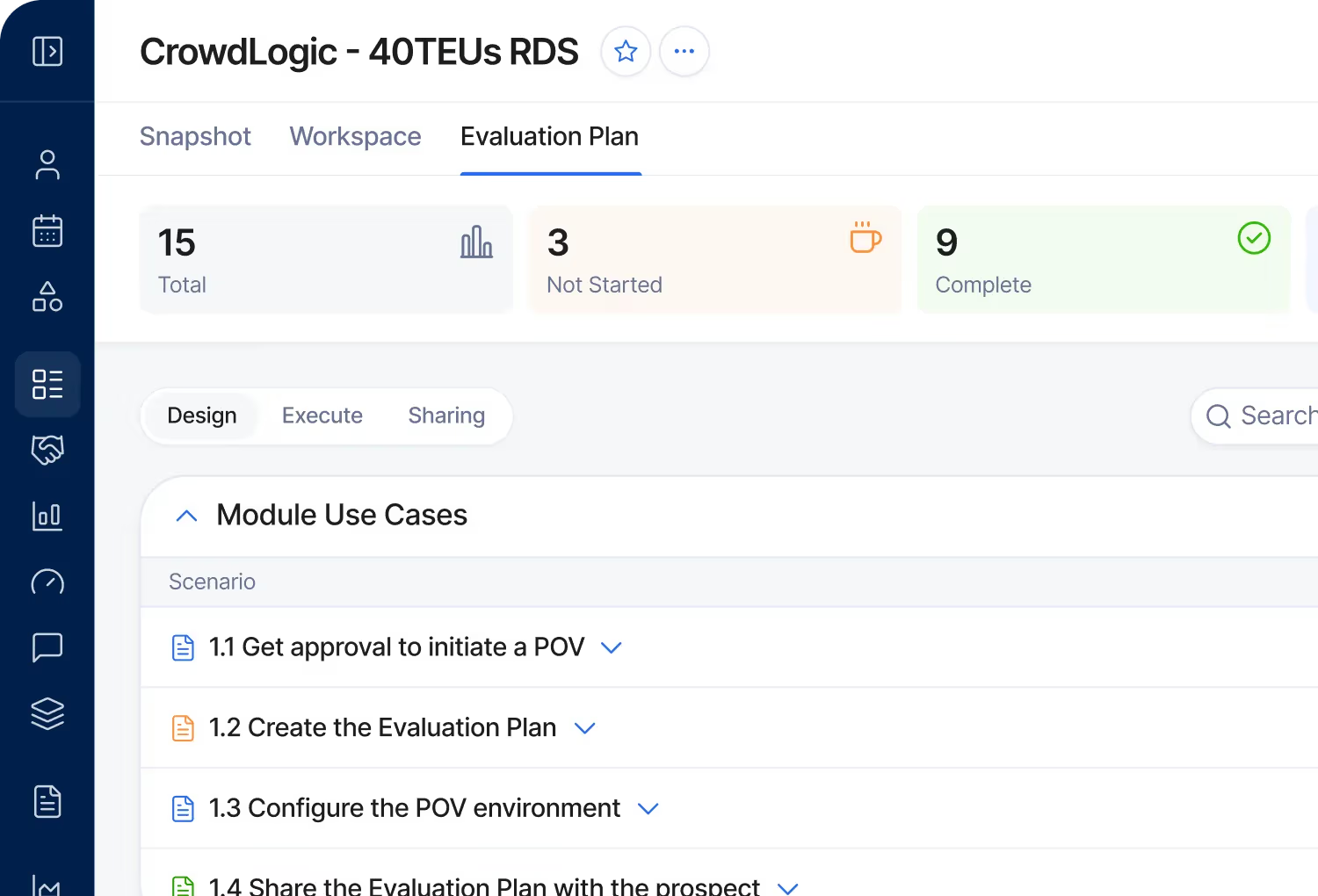
Instead of starting with reporting, start with how the work actually happens. If presales holds the most valuable insight, the goal should be to capture that insight as a natural by-product of doing the work, not as an extra task at the end. That thinking leads to a different set of questions:
- Is there a single place where a deal is managed end-to-end from a technical perspective?
- Are key details being captured during calls, not after the fact?
- Can risks, blockers, and feature gaps be recorded consistently?
- Is that information easy to aggregate across deals without manual effort?
If the answer to most of those is no, then it’s not surprising that the data isn’t flowing through the organization.
A simple framework to assess where you are
You don’t need a full transformation to get started, as a quick sense check of three areas is usually enough.
Capture
Are you consistently capturing:
- Business objectives and success criteria
- Technical risks and blockers
- Feature requests tied to deals
Or is that information scattered across notes, calls, and conversations?
Structure
When the data is captured:
- Is it standardized in a way that others can understand?
- Can multiple deals be compared without interpretation?
- Does it link back to revenue, not just activity?
Or does it depend on who wrote the notes?
Visibility
Once it’s captured and structured:
- Can managers see deal health without chasing updates?
- Can leadership identify patterns across deals?
- Can product teams see where gaps are costing revenue?
Or is everything still reliant on manual updates and conversations?
What changes when you get this right
When presales insight is captured and structured properly, a few things start to shift. Forecast conversations become more grounded, so instead of debating whether a deal “feels good”, you can point to specific risks and blockers. Deal reviews become more proactive because you can identify issues earlier, while there’s still time to fix them. Product conversations become more focused as you can show which gaps are tied to actual revenue.
None of this requires a dramatic change overnight. It’s usually the result of making it easier to capture the right information, consistently, and letting that compound over time.
What to do next
If any of this feels familiar, the next step isn’t to overhaul everything at once. Instead, pick one area where you know insight is being lost, such as feature requests, POC tracking, or simply understanding why deals stall. Then ask a straightforward question: how do we make it easier for the team to capture that information as part of their normal workflow?
If you want to see what that looks like in practice, Homerun Presales can walk you through how leading teams are capturing this kind of insight as part of their day-to-day work, without adding more admin or overhead. It’s a practical way to understand where your current process is breaking down and what better could look like. Contact us today and book a quick session with the team, or visit www.homerunpresales.com and book a personalized demo.
Latest articles





.avif)

.avif)








Blog
POC Best Practices: Evaluation Plans – The Key to Great POCs and POVs
December 7, 2022
-
4 min read




















Blog
How to Get Marketing to Find Deals that Are Amazing ‘Technical Fits’
November 10, 2021
-
4 min read








Ready to make presales your unfair advantage?
One workspace, one team. Give everyone the clarity to work together, move faster, and win more.